
Bouncing castles bring joy to kids and excitement to every event. Whether it’s a birthday party, school fair, or a weekend at Amanah Mall’s fun area, these inflatables are a big hit. But before the fun begins, safety and efficiency in setup are crucial. In this blog, we’ll guide you through the correct steps to set up a bouncing castle with care and confidence.
Why Safety Matters When Setting Up a Bouncing Castle
Safety isn’t just an option; it’s a responsibility. A poorly set-up bouncing castle can lead to injuries, especially in busy areas like jumping zones or mall fun areas. Kids run, jump, and roll with high energy. Without proper anchoring, clean surfaces, and supervision, accidents can happen fast.
At places like Amanah Mall, professional teams ensure all equipment meets safety standards. You can do the same at home or at any event by following simple but essential steps.
Pre-Setup Checklist
Before inflating the castle, do this basic safety inspection:
Check the Ground
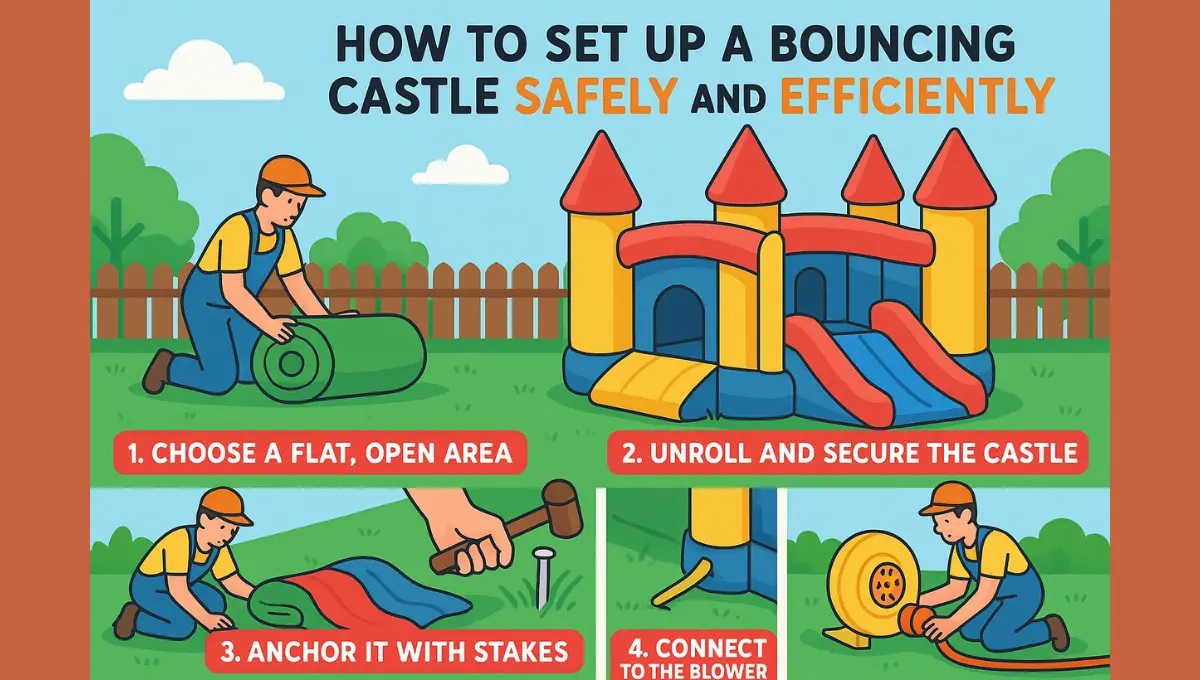
Choose a flat, debris-free surface. Grass or artificial turf is ideal. Avoid placing the castle on gravel or hard concrete unless using proper padding.
Check the Weather
Don’t set up a bouncing castle in high winds or rain. Wet surfaces are slippery, and wind can move unsecured castles, risking injury.
Measure the Space
Ensure there’s at least a 5-foot safety zone around the castle. This allows children to enter and exit without bumping into walls or furniture. For public areas like play zones, verify dimensions with the venue.
Inspect Equipment
Make sure all parts are clean, undamaged, and dry. Check for punctures, torn seams, or worn-out Velcro. Don’t risk setting up faulty equipment.
Step-by-Step Guide to Setting Up a Bouncing Castle
Setting up a bouncing castle doesn’t need to be complicated. Follow these easy steps for a quick and safe installation.
Step 1: Unroll and Position the Castle
Lay out the deflated castle on a smooth, dry surface. Position it facing the direction you want the entrance to go. Make sure it’s centered in the designated area.
Step 2: Secure the Base
Use ground stakes to anchor the corners if on grass. For hard surfaces like tile or concrete, use heavy-duty sandbags at each anchor point. Never skip this step.
Step 3: Attach the Blower
Secure the blower tightly to the air inlet tube. Use built-in straps or ties to seal the connection. Avoid air leaks to ensure full inflation.
Step 4: Power Up and Inflate
Plug in the blower and turn it on. The castle should fully inflate in a few minutes. Do not allow children near during this stage.
Step 5: Final Safety Check
Inspect the fully inflated castle. Check stability and look for signs of air leakage or imbalance. Make sure all tie-downs are firm and the entrance is accessible.
Supervision and Safety Guidelines
Even with perfect setup, supervision is key. A responsible adult must always watch children playing inside the bouncing castle. Set clear rules:
- No shoes inside.
- No food or drinks.
- No flips, somersaults, or rough play.
- Limit the number of kids based on age and size.
At places like Amanah Mall’s jumping zone, trained staff supervise the play area, ensuring a safe and fun experience for all.
Tips for Efficient Setup at Events or Commercial Spaces
Setting up a bouncing castle at commercial venues like malls, festivals, or schools needs extra efficiency.
- Use labeled bags for all parts—blower, stakes, repair kit, and the castle itself.
- Print and laminate setup instructions for quick reference.
- Assign roles to team members: one unpacks, one inflates, one anchors, and one inspects.
For large-scale events, consider hiring a certified installation team. This ensures full compliance with local safety laws and gives parents peace of mind.
Common Mistakes to Avoid
Even experienced users can overlook key setup steps. Here are common mistakes—and how to avoid them.
Skipping the Ground Check
Bumps or debris can cause discomfort or damage to the base. Always inspect and clear the area before unrolling the castle.
Ignoring Manufacturer Instructions
Each castle has specific guidelines. Follow them closely, especially regarding blower capacity and anchor requirements.
Overcrowding the Castle
Too many children can lead to collisions and injuries. Stick to capacity limits. If needed, create a time-based play schedule.
Using in Bad Weather
Wind is a major risk factor. Even light wind can lift an unsecured castle. If weather changes suddenly, stop use and deflate the structure.
When and How to Pack It Up
Once the event ends, it’s time to safely deflate and store the bouncing castle.
Step 1: Power Down the Blower
Turn off the blower and let the air escape naturally. Don’t force it out.
Step 2: Clean the Surface
Use a soft brush or cloth to remove dirt. Avoid chemicals that may damage the material.
Step 3: Dry Completely
Before folding, let the castle dry fully. Moisture causes mold and weakens seams.
Step 4: Fold and Store
Fold neatly and place it in a dry storage bag. Store in a cool, shaded area. Keep away from direct sunlight to protect the material.
Conclusion
A bouncing castle is more than inflatable fun—it’s a responsibility. Whether you’re setting up for a home party or managing a large play area like the one in Amanah Mall, safety should always come first.
Follow our step-by-step guide to ensure efficient setup, joyful playtime, and worry-free fun. With proper care and attention, you’ll create a secure space where kids can jump, laugh, and make lasting memories.
FAQs
How long does it take to set up a bouncing castle?
On average, 15–30 minutes including inflation and safety checks.
Can I set it up indoors?
Yes, if space and height allow. Always confirm with venue management.
Q: What’s the ideal age group?
Most castles cater to kids aged 3 to 12. Always check weight and size limits.