
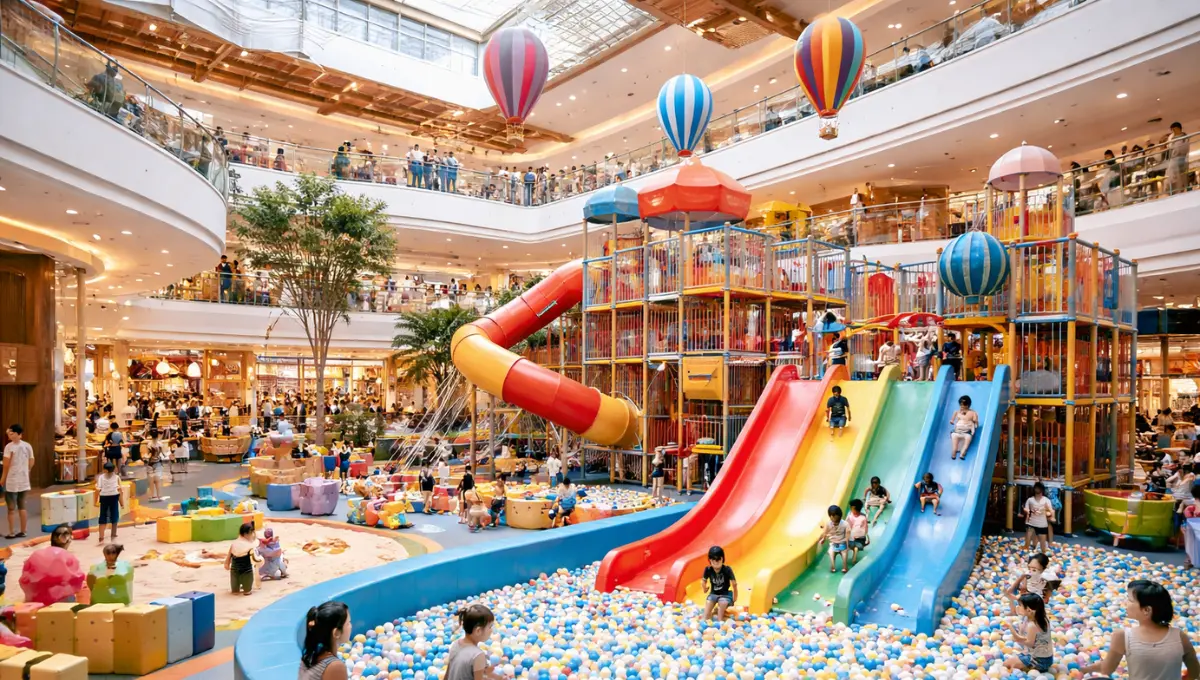
Shopping malls have changed over time. They are no longer just places to shop. Modern malls now focus on family comfort. One key feature driving this change is play areas. These spaces keep children engaged while parents shop in peace.
Play areas in malls offer fun, safety, and convenience. They improve the overall shopping experience. Parents feel relaxed. Kids stay happy. Malls benefit from longer visits and repeat footfall.
This makes play areas an essential part of today’s shopping culture.
What Are Play Areas in Malls?
Play areas in malls are dedicated zones designed for children. These spaces allow kids to play, explore, and interact in a safe environment. They are usually located near food courts or entertainment zones.
Most mall play areas are indoor. They stay open throughout the year. Weather does not affect them. This makes them ideal for families.
Play areas cater to different age groups. Some focus on toddlers. Others serve older kids. Many malls divide zones by age to ensure safety.
Common features include slides, ball pits, climbing frames, and interactive games. Some play areas also include learning activities.
These zones turn malls into family-friendly destinations.
Why Play Areas Are Important for Kids
Children need active play. It supports healthy growth. Mall play areas provide this opportunity in a controlled setting.
Physical activity improves strength and coordination. Running, climbing, and jumping keep kids active. This helps reduce screen time.
Play areas also support mental development. Kids solve problems while playing. They explore new ideas. This builds creativity.
Social interaction is another key benefit. Children meet others their age. They learn sharing and teamwork. These skills support emotional growth.
Safe play environments help kids feel confident. Supervised play reduces risks. Parents trust these spaces.
Play areas support balanced child development.
How Play Areas Help Parents Shop Stress-Free
Shopping with kids can be challenging. Children get bored quickly. This often leads to rushed shopping trips.
Play areas solve this problem. Kids stay entertained. Parents get free time to shop comfortably.
Parents can explore stores without distraction. They can dine peacefully. This improves their overall mall experience.
Play areas also help parents plan longer visits. They spend more time in the mall. This increases convenience.
Many parents prefer malls with play areas. These malls become regular family spots.
Stress-free shopping benefits both parents and retailers.
Types of Play Areas Commonly Found in Malls
Soft Play Areas
Soft play areas are designed for younger children. They use padded equipment. Slides, tunnels, and foam blocks are common.
These zones focus on safety. Soft surfaces reduce injuries. Toddlers can play freely.
Parents feel secure in these spaces.
Adventure and Activity Zones
Adventure zones target older kids. They include climbing walls and obstacle courses. Some feature rope challenges.
These areas encourage physical effort. Kids build confidence and strength.
Adventure play zones add excitement to mall visits.
Arcade and Interactive Game Zones
Arcade zones combine fun with technology. Kids enjoy digital games and skill-based activities.
Interactive screens improve engagement. Some games reward learning and coordination.
These zones attract kids of all ages.
Safety Measures in Mall Play Areas
Safety is a top priority in mall play areas. Reputable malls follow strict standards.
Trained staff supervise children at all times. Entry and exit points stay controlled.
Equipment undergoes regular maintenance. Broken items are removed immediately.
Cleanliness matters. Play areas are sanitized daily. Hygiene protocols protect children.
Emergency procedures remain in place. Staff receive proper training.
Parents trust malls that invest in safety.
Play Areas as a Value Addition for Shopping Malls
Play areas benefit malls directly. They increase foot traffic. Families prefer malls with kid-friendly facilities.
Parents stay longer when kids stay busy. Longer visits lead to higher spending.
Play areas improve brand image. Malls become community spaces. Families return regularly.
Retailers also benefit. Happy customers explore more stores.
Play areas support mall growth and success.
Things Parents Should Check Before Choosing a Play Area
Not all play areas offer the same quality. Parents should stay informed.
Check age suitability first. Choose zones designed for your child’s age.
Observe cleanliness. A clean play area reduces health risks.
Confirm staff supervision. Trained attendants are essential.
Review safety rules. Secure entry systems matter.
Understand pricing and time limits. Transparency avoids confusion.
Informed choices keep kids safe and happy.
Play Areas in Pakistani Shopping Malls
Play areas are growing in popularity across Pakistan. Urban families demand safe entertainment for kids.
Major cities now feature modern indoor play areas. Lahore, Karachi, and Islamabad lead this trend.
Malls invest in quality play zones. These areas attract families from nearby communities.
Parents prefer malls that offer complete experiences. Shopping, dining, and kids’ entertainment in one place.
Play areas now shape mall design in Pakistan.
Future of Play Areas in Malls
Play areas continue to evolve. Technology plays a key role.
Interactive digital play is increasing. Educational games combine fun and learning.
Eco-friendly materials are gaining attention. Sustainable designs matter.
Smart play zones use sensors and guided activities. These improve engagement.
Future play areas will focus on safety, learning, and innovation.
Malls that adapt will stay competitive.
FAQs
Are play areas in malls safe for kids?
Yes. Most mall play areas follow strict safety and hygiene standards. Supervision and secure systems ensure child safety.
What age group can use mall play areas?
Play areas usually cater to toddlers and children up to 12 years. Many zones separate kids by age.
Do malls charge for play areas?
Some malls offer free play areas. Others charge hourly fees. Prices depend on facilities and duration.
How long can kids stay in a play area?
Time limits vary. Most play areas allow sessions ranging from 30 minutes to two hours.
Conclusion
Play areas in malls have become essential. They create balance for families. Kids enjoy safe entertainment. Parents shop without stress.
These spaces support child development. They enhance mall experiences. They increase footfall and loyalty.
Modern malls understand this value. Investing in play areas benefits everyone.
Play areas turn malls into true family destinations.