
Introduction
Hygiene plays a major role in shaping a safe and enjoyable dining experience. Food courts handle thousands of customers daily, so cleanliness becomes a top priority. People want reassurance that the food they eat comes from a clean and well-managed space. That is why modern malls take hygiene seriously and follow strict standards.
Food courts in popular shopping destinations, including Amanah Mall, offer a clean and comfortable environment where families can eat with confidence. These hygiene standards protect health, build trust, and improve the overall mall experience.
Why Hygiene Standards Matter in Food Courts
Growing Customer Awareness
People today pay close attention to cleanliness. They look at the food area, tables, staff appearance, and even waste bins. Social media reviews also influence public perception. If customers find a food court clean, they return again. But if they see poor hygiene, they avoid the place and share negative feedback.
Cleanliness directly affects footfall and reputation. Food courts must meet customer expectations or risk losing loyal visitors.
Food Safety as a Priority
Hygiene is not only about appearance. It also protects customers from foodborne illnesses. Safe food handling, clean surfaces, and proper storage reduce the risk of contamination.
Food courts that follow hygiene rules provide safe meals and maintain customer trust. Clean environments also encourage families, especially those with children, to dine comfortably.
Daily Cleaning Protocols in Food Courts
Surface Cleaning and Sanitization
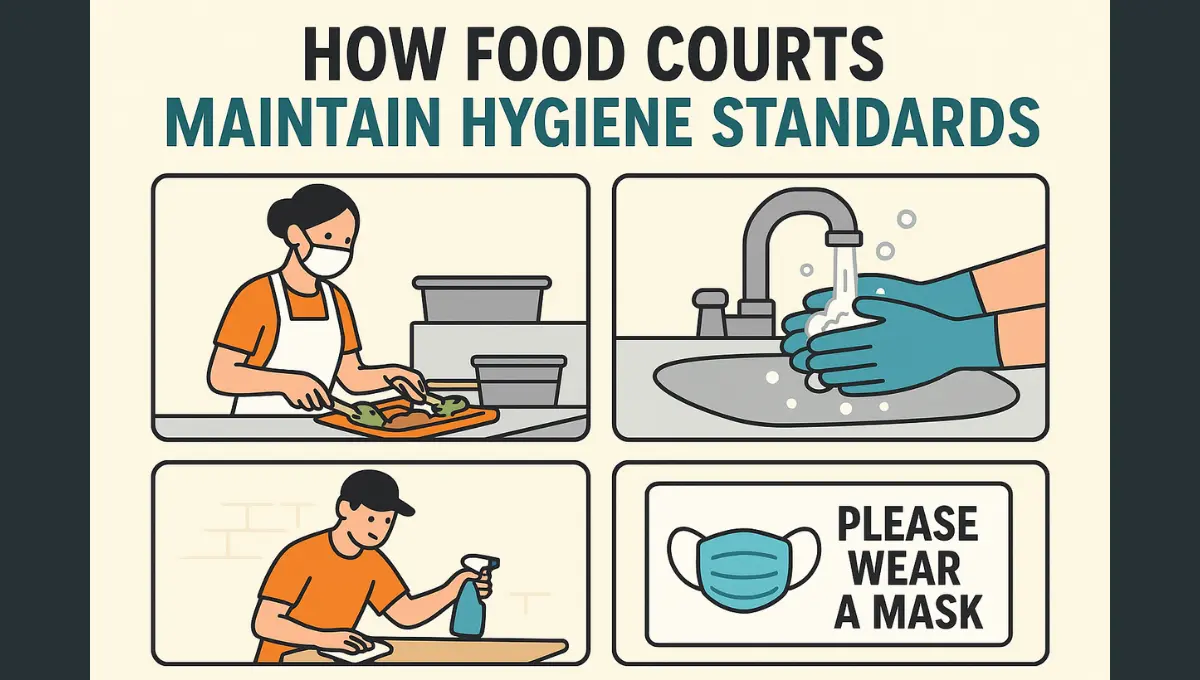
Food courts follow daily cleaning protocols to keep the environment germ-free. Staff clean tables, chairs, and trays after each use. They sanitize counters, condiment areas, and payment counters frequently.
Approved cleaning chemicals help remove bacteria and viruses. Regular sanitization boosts customer confidence and keeps the dining area fresh throughout the day.
Food Handler Hygiene
Staff hygiene directly affects food quality. Food handlers must wash hands properly, use gloves, and wear hairnets. These practices prevent contamination and ensure safe food preparation.
Many food courts conduct training sessions for their workers. They teach them safe cooking methods, correct cleaning processes, and proper hygiene rules. Clean uniforms and visible hygiene routines also build customer trust.
Kitchen and Back-End Hygiene Practices
Proper Food Storage
Back-end hygiene is as important as the front-end. Food courts store raw and cooked items separately to avoid cross-contamination. Cold storage maintains the right temperature for meat, vegetables, and dairy products.
Clear labeling and sealed containers keep ingredients fresh and safe. These steps protect food quality and reduce wastage.
Safe Food Preparation Areas
Clean preparation areas prevent germs from spreading. Staff sanitize cutting boards, knives, and utensils before use. Food preparation stations remain organized and clutter-free.
Pest control is a major part of kitchen hygiene. Regular inspections help keep insects and pests away. Waste disposal also follows a proper schedule to avoid foul smells and contamination.
Regular Health Inspections
Food courts face strict inspections from internal teams and local food authorities. These inspections check safety standards, food handling methods, and overall cleanliness.
Brands that fail to meet standards receive warnings or penalties. This system ensures that every food court vendor follows the rules without compromise.
Waste Management Systems
Easy-to-Access Dustbins
A clean food court needs an effective waste management system. Dustbins are placed in multiple locations so customers can dispose of trash easily. Staff empty bins regularly to prevent overflow and odor.
A clean environment encourages customers to keep the area tidy and reduces the chances of insects or contamination.
Recycling and Eco-Friendly Waste Disposal
Many modern food courts follow eco-friendly waste disposal methods. They encourage recycling and proper separation of waste.
These practices improve hygiene and support environmental sustainability. Clean surroundings also create a pleasant dining atmosphere for visitors.
Customer Role in Maintaining Hygiene
Self-Cleaning Stations
Food courts support customers in maintaining cleanliness. They provide napkin dispensers, sanitizer stands, and cleaning wipes. Some food courts have tray return stations where customers return their trays after eating.
These systems keep the dining area clean and reduce the load on the cleaning staff.
Awareness Signboards
Food courts display awareness signs to remind customers to maintain hygiene. These signs encourage people to keep tables clean and throw waste in the bins.
A cooperative environment helps maintain cleanliness and improves the overall dining experience.
Technology’s Role in Improving Hygiene Standards
UV Sterilizers & Air Purifiers
Technology plays a major role in modern hygiene systems. Some food courts use UV sterilizers to disinfect trays and utensils. Air purifiers help maintain clean and fresh air in crowded areas.
These technologies provide an extra layer of safety and reduce the spread of germs.
Digital Monitoring
Many malls now use digital tools to monitor cleanliness. Sensors installed in washrooms track usage and alert staff when cleaning is required. Automated cleaning schedules ensure that hygiene standards stay consistent.
This system helps maintain cleanliness even during busy hours.
How Amanah Mall Ensures a Clean and Safe Food Court
Dedicated Cleaning Teams
Amanah Mall maintains strict hygiene standards to offer a safe dining experience. The mall has a dedicated cleaning team that works round the clock. They clean tables, trays, washrooms, and high-touch areas frequently.
Their presence ensures maximum cleanliness during peak hours.
Strict Vendor Guidelines
Every food brand in the food court follows strict hygiene guidelines. Vendors undergo regular checks to ensure compliance. They follow proper storage, cooking, and serving methods.
Amanah Mall monitors each vendor carefully to maintain high-quality standards.
Customer Comfort and Safety First
Amanah Mall focuses on customer comfort. The food court has proper ventilation, clean seating areas, and a smooth waste management system. Families feel safe and relaxed while dining.
These efforts create a healthy and enjoyable environment for everyone.
Conclusion
Hygiene plays a vital role in the success of any food court. Clean tables, fresh food, sanitized surfaces, and trained staff make dining safe and enjoyable. Food courts that follow strict hygiene rules earn customer trust and maintain high footfall.
Malls like Amanah Mall set a strong example by ensuring cleanliness at every step. Their focus on safety, quality, and comfort creates a pleasant dining experience for visitors.
Choosing a hygienic food court protects your health and guarantees a better dining experience for you and your family.